
Your prints are inconsistent, with some stencils exposing perfectly while others fail. This wastes materials and time, eating into your profits and creating huge frustration.
Thickness tolerance is the allowed variation in a film's thickness. A smaller tolerance means a more uniform film. This leads to consistent screen exposure, sharper stencils, less waste, and higher quality prints every single time.

As someone whose company specializes in manufacturing these materials, I discuss thickness tolerance with clients almost every day. It sounds like a very technical detail, but I've seen firsthand how this one small number can be the root cause of major production headaches. It's the difference between a smooth, profitable day and a frustrating one filled with mistakes. Let's look at why it's so important.
How Does Inconsistent Film Thickness Ruin Your Print Quality?
You expose a perfect screen, but tiny pinholes or blurry edges appear. You blame your emulsion or exposure unit, leading to endless troubleshooting.
Inconsistent thickness causes uneven light exposure. Thinner spots let too much light through, leading to overexposure and pinholes. Thicker spots block too much light, causing underexposure and soft, blurry edges on your stencil. A consistent film ensures perfect exposure every time.

The quality of your screen stencil is all about controlling light. Your inkjet film positive acts as a mask, blocking UV light in the image areas. If that mask isn't uniform, you lose control. I remember a customer who was struggling with high-detail prints. Their lines were breaking up on the screen. We looked at everything—the artwork, the emulsion, the exposure time. Finally, we put their cheap film under a micrometer. The thickness varied wildly across a single sheet. The thin spots were essentially 'burning out' during exposure, destroying the fine details. A film with a tight tolerance, like the ones we produce at SeyFilm, provides a completely uniform barrier to the light. This means the light only passes through where it's supposed to, creating razor-sharp, durable stencils. It takes the guesswork out of your exposure process and gives you the crisp, accurate results you need.
Thickness Tolerance Impact
| Feature | Loose Tolerance (Inconsistent) | Tight Tolerance (Consistent) |
|---|---|---|
| Exposure | Uneven, unpredictable | Even, standardized |
| Stencil Edges | Soft, blurry, potential scumming | Crisp, sharp, clean |
| Fine Details | Often lost or broken | Held perfectly |
| Pinholes | Common, especially in thin spots | Drastically reduced or eliminated |
Can a Tighter Tolerance Really Boost Your Production Efficiency?
You're constantly adjusting your exposure times for each new stencil. This constant calibration slows down your workflow and creates a major production bottleneck.
Yes, absolutely. A film with consistent thickness lets you standardize your exposure times. You "dial it in" once and can trust it for the whole pack or roll. This dramatically reduces setup time, minimizes misprints, and lowers your overall production costs.

Time is money in any print shop. Every minute you spend re-shooting a screen is a minute you're not printing shirts or signs. This is where a tight thickness tolerance pays for itself over and over. A high-volume client of mine was experiencing a 15% failure rate on their screens. Think about that—for every 100 screens they made, 15 went straight into the reclaim booth. We traced the problem back to their film's poor consistency. After they switched to our film with a much tighter tolerance, their failure rate dropped to under 2%. The change allowed them to create a standard operating procedure[^1] (SOP) for screen making. Their team no longer had to guess the exposure time. They used the same setting every single time, which made training new employees much easier. The money they saved on film, emulsion, and labor was significant, but the biggest gain was in their production speed and predictability. They could confidently schedule jobs knowing their screens would be ready on time.
What Else Should You Consider Besides Film Thickness?
You found a film with great tolerance, but the ink pools on the surface. Or you worry that the materials are not safe or environmentally friendly.
Beyond tolerance, you must ensure the film is compatible with your specific printer and inks, whether they are aqueous, solvent, or UV. Also, look for important certifications like ISO, REACH, and RoHS to guarantee the product is safe and meets modern environmental standards.
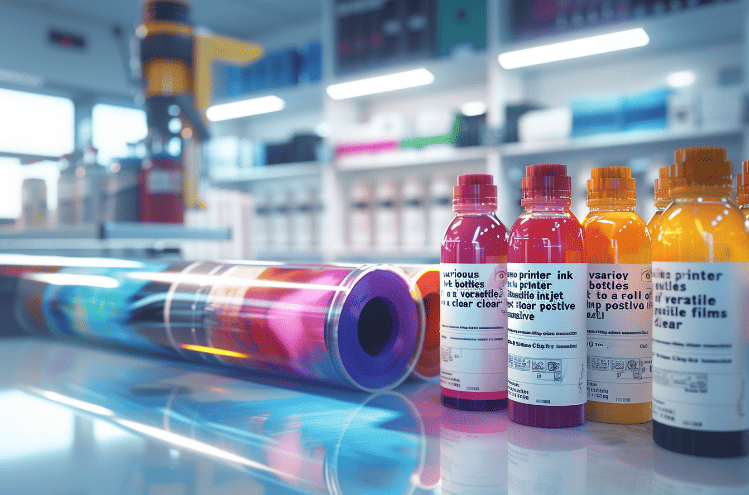
While thickness is critical, it isn't the only factor. A film's coating must be engineered to work with your specific ink set. A film designed for standard water-based dye inks will cause solvent or UV inks to smudge and bead up. In my role, I work closely with our R&D team to develop coatings that offer wide compatibility. Our films are tested with a huge range of printers and inks to ensure they deliver top performance no matter the equipment. And today, performance must go hand-in-hand with responsibility. As a working mom, I care deeply about the safety and environmental impact of the products I represent. That's why I'm so proud that our products are certified under standards like ISO 9001 and RoHS. This means they are manufactured with strict quality control and are free from harmful substances. Choosing a certified product isn't just good for the planet—it's good for your business, as it assures your customers that you partner with responsible suppliers.
Conclusion
Thickness tolerance[^2] is key to print quality and efficiency. By choosing a film with tight tolerance and broad compatibility, you reduce waste, save money, and produce consistently excellent prints.
1.Understand the importance of SOPs in improving efficiency and consistency in printing.
2.Understanding thickness tolerance is crucial for achieving consistent print quality and reducing waste.