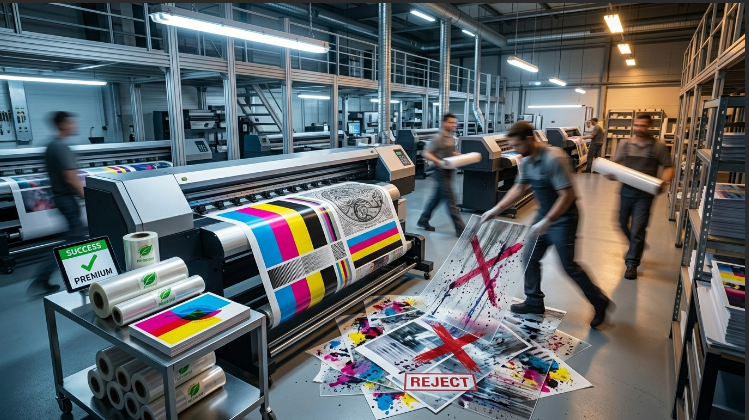
Your prints are coming out blurry and inconsistent. This wastes expensive materials and delays your jobs, frustrating both you and your clients.
To choose the right inkjet film, you must match it to your specific printing needs. Consider the job's required resolution, the film's material quality (like a PET base), its special coating technology, and current market trends like sustainability.
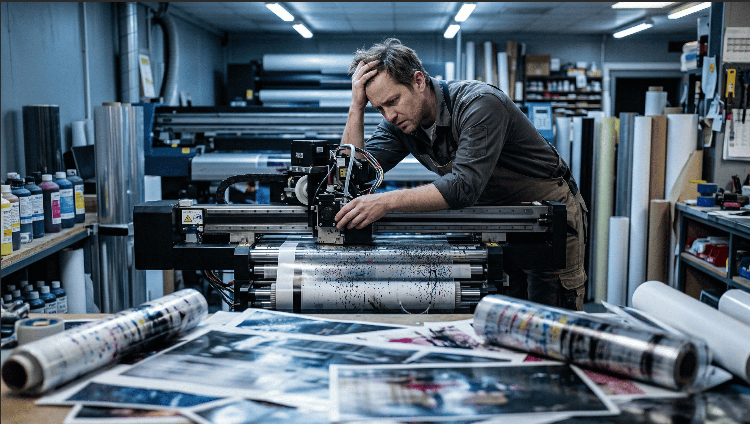
As someone who has worked in the coated printing materials industry for over a decade, I see printers face this choice every day. It’s a decision that directly impacts the quality of your work and the efficiency of your shop. Getting it right is easier than you think. Let's break down the key factors to help you make the perfect choice.
Does Your Project Demand a Specific Type of Film?
You use the same film for every job, but your results vary. Fine text comes out fuzzy, and large solid areas look uneven.
Yes, absolutely. For high-precision jobs with fine details, you need a high-resolution film. For large posters or signs, a film with excellent transparency and uniform coating is more important to ensure smooth, solid color blocking on your screen.
The first question I always ask my clients is, "What are you printing?" The answer changes everything. Think of it like this: you wouldn't use the same tool for a delicate sculpture and a large wall. It's the same with film. I had a customer who printed intricate clothing tags. They needed a film capable of holding extremely fine lines without the ink bleeding. For them, a high-resolution film with a specialized receptor coating was essential. On the other hand, another client who makes large event banners needed a film that provided perfectly uniform black density over a huge area. Their main concern was preventing any light pinholes in the final stencil. So, before you even look at film brands, look at your project. Do you need sharp details or flawless solids? Answering this question will immediately narrow down your options and point you toward the right film for the job.
Why Do Film Material and Coating Matter So Much?
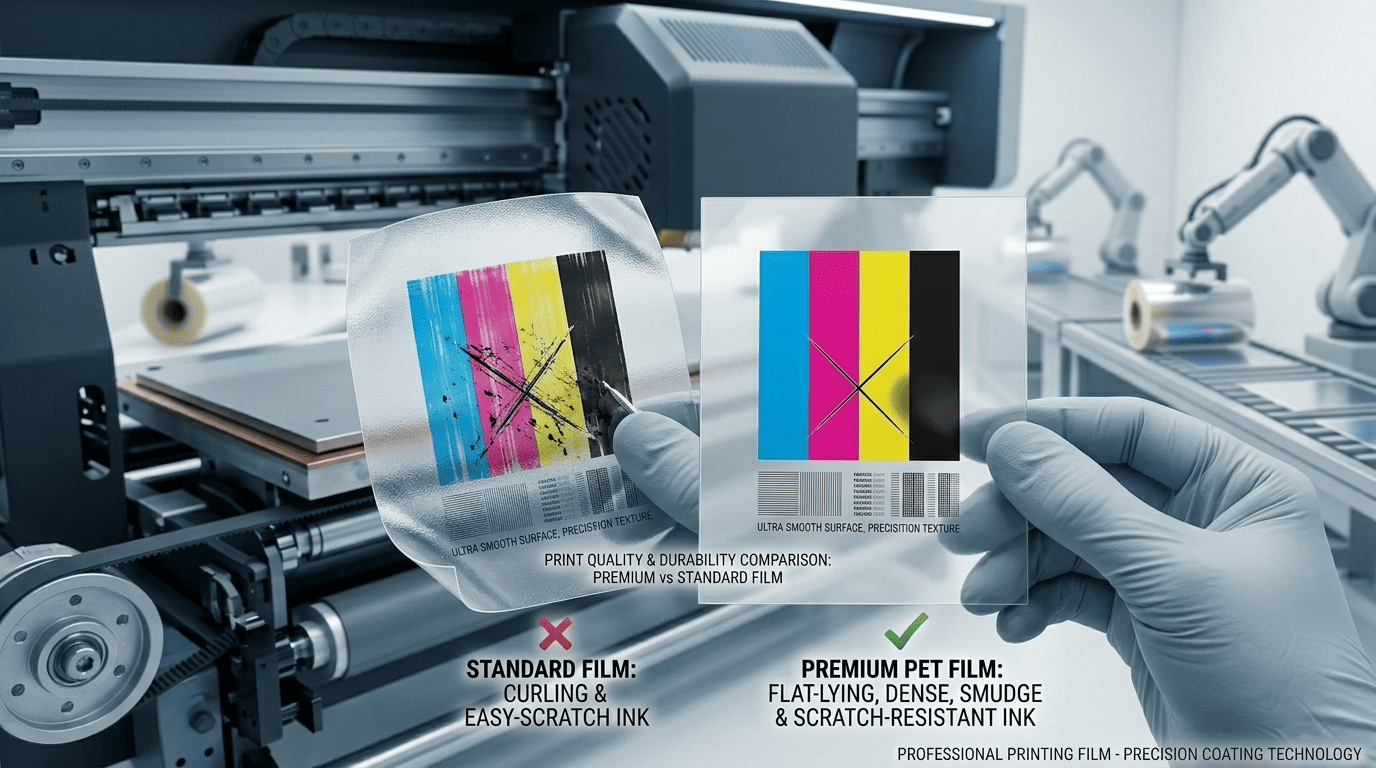
Your film curls up in the printer or the ink scratches off easily. This ruins your stencils and forces you to restart, wasting valuable time.
A high-quality PET base provides stability, so your film lays flat and doesn't distort. An advanced top coating is designed to absorb ink perfectly, creating a sharp, durable, and super-dense image that won't smudge or scratch.
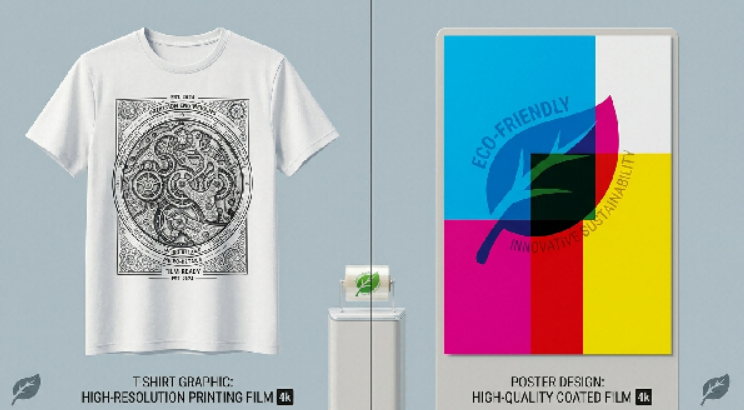
The base material and the coating are the heart and soul of an inkjet film. Most quality films use a PET (polyester) base. It's strong, crystal clear, and, most importantly, stable—it doesn't shrink or stretch with changes in temperature or humidity. I've heard horror stories from printers who used cheap, low-grade film that warped right in the printer, causing print head strikes and registration nightmares. But the real magic is in the coating. At SeyFilm, this is our specialty. Our coating layer is engineered to act like a microscopic sponge. It instantly grabs the ink droplets and prevents them from spreading. This is what gives you those razor-sharp edges and high black density. A good coating also protects the image. Once the ink is dry, it's locked in, making it resistant to scratches during handling and exposure. A good film is an investment in reliability. It ensures your hard work creating the design isn't ruined by a poor foundation.
Is Choosing an Eco-Friendly Film a Smart Business Move?
Clients are starting to ask about your environmental practices. You worry that using traditional materials could make you seem outdated and cost you business.
Yes, it's a very smart move. Choosing eco-friendly film meets growing customer demand for sustainability. It shows your company is responsible and can give you a competitive edge without sacrificing the high-quality results your clients expect.
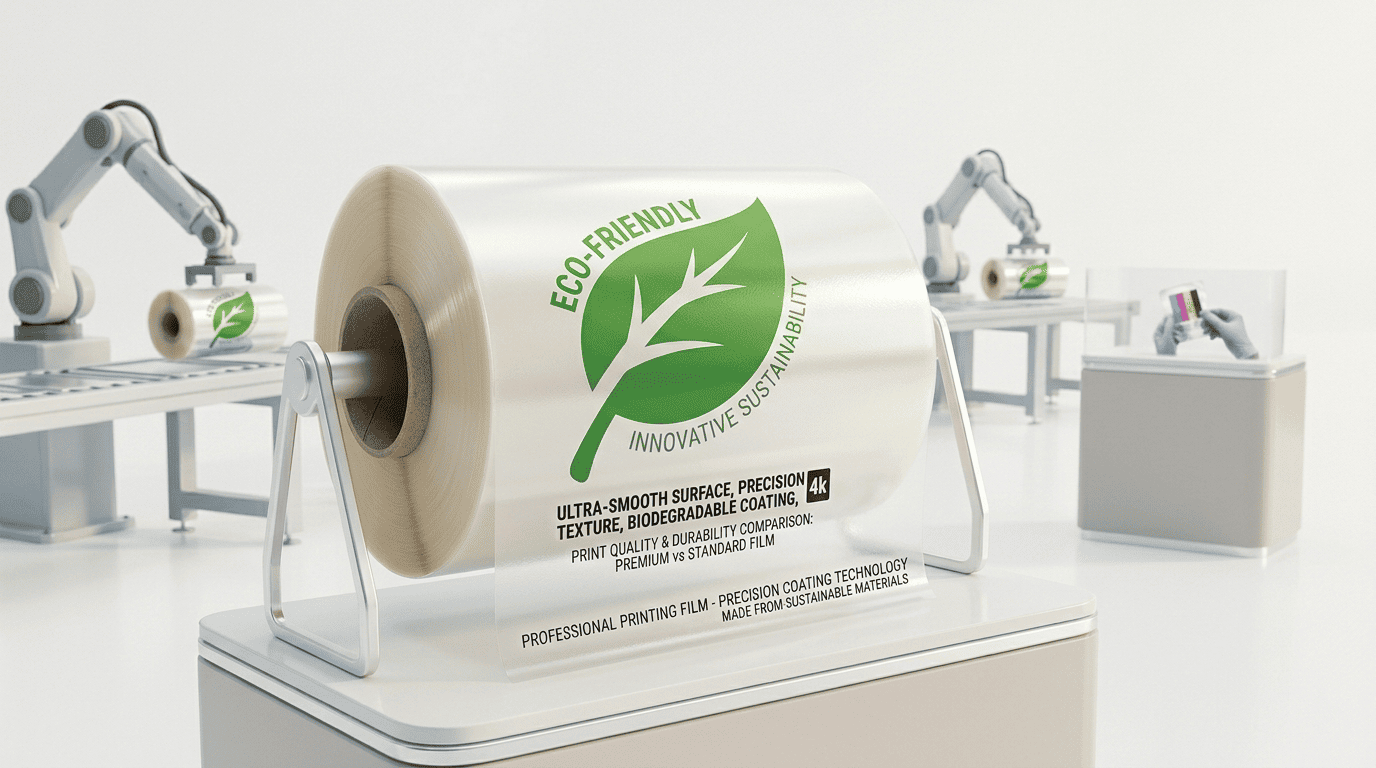
As a Product and Marketing Manager, I see market trends shift firsthand. Right now, one of the biggest shifts is towards sustainability. Just a few years ago, "eco-friendly" was a niche request. Today, it's becoming a standard expectation. Major brands and even small businesses want to work with partners who share their commitment to the environment. Choosing an eco-friendly inkjet film is a powerful way to show you are one of those partners. These newer films are often made with more responsible materials and production processes, reducing environmental impact. I am a mom of two, and I love sharing with my family that my work contributes to a healthier planet. And thankfully, modern technology means you don't have to choose between being green and getting great performance. Our eco-friendly films at SeyFilm meet strict standards like RoHS, ensuring they are safe and high-performing. It's a win for the planet, a win for your clients, and a win for your business.
Conclusion
Choose the right inkjet film by matching it to your project's needs, insisting on quality materials, and embracing sustainable options. This ensures superior quality, efficiency, and a competitive edge.